Barcodes for Retail Products
Everything from groceries to hospital wristbands has a barcode. Since their creation in 1949, they've transformed commerce, yet they've been mostly underutilised by the small company community.
According to an internal poll, 79 percent of small business owners don't comprehend barcodes well enough to use them in their operations. Data from major search engines backs this up: Google receives more than 20 million barcode-related searches each year.
At Barcodetag.org, we believe that every small business owner should have access to the resources they require to succeed. We hope to convey that insight in this post, as well as enable the modern small business owner to increase productivity and take the next significant step toward barcoding products and inventories.
When To Start Barcoding
When will you know whether your company is large enough to require barcodes? What are the requirements for integrating them into your existing inventory or checkout system? What are the costs and benefits in terms of money? While each situation is unique, these responses might steer you in the proper route for your company.
1- Why businesses use barcodes- The following are the most rewarding advantages of barcoding your items and inventory:
- Errors are less likely to occur- When you manually type a string of letters and numbers into a computer, you expose your company to mistakes. You face the danger of hitting the wrong key on the keyboard every time you need to ring up a customer, track a package, or log inventory. The typical person makes one error every 300 characters when manually entering data. When compared to barcode scanners, which produce one error every 36 trillion characters, this is a huge difference. Is it feasible for your company to take such a risk?
- Savings of time- Data entry is a time-consuming operation. Consider the time it takes your brain to perform a task against the speed with which your computer operates. While the time difference may be insignificant in small batches, when collected over hours or even pay periods, that time adds up and may be put to better use. This can also be quite important to your clients. Hand-keying things at the checkout also takes time. Is it worthwhile to invest their time?
-
Lowering the cost of doing business- The widespread use of barcodes has reduced the cost of the necessary equipment. As a result, a one-time upfront fee becomes less expensive than paying employees to perform the same work on a weekly basis.
This gain may also be seen in terms of your overhead. More precise data can assist you in reevaluating your spending. Overestimating your inventory, for example, if you're paying for warehouse space, could be costing your company money.
-
Overall, there are fewer expenses- More precise data can assist you in reevaluating your spending. Overestimating your inventory, for example, if you're paying for warehouse space, could be costing your company money.
-
Updating Pricing is Simple- If your items have price tags attached, updating product pricing can be a time-consuming and labor-intensive operation. Instead, use barcodes on the real products and show the price on the product's shelves or as signs.
When prices alter, this strategy involves far less effort. Instead than altering each price tag individually, you'd make the adjustment to the shelf signage and the barcode database once.
2- How to decide if your small business is ready for barcodes
Unless you're selling in a retail sector, barcodes are absolutely optional (i.e. "big box stores" like WalMart and Flipkart). If you sell on your own website or to small businesses, you should consider using a barcode system if:
- You own a product-based company
- You're in charge of a large inventory
- You require more precise inventory count
- You have a number of retail or storage establishments
- You must keep track of moving parts
- You collaborate with other businesses
- You want to set yourself up for success
- You're not the only one who works here
- You want to reduce the time it takes for customers to check out
- You wish to project a more professional image
3- What type of barcode you'll need
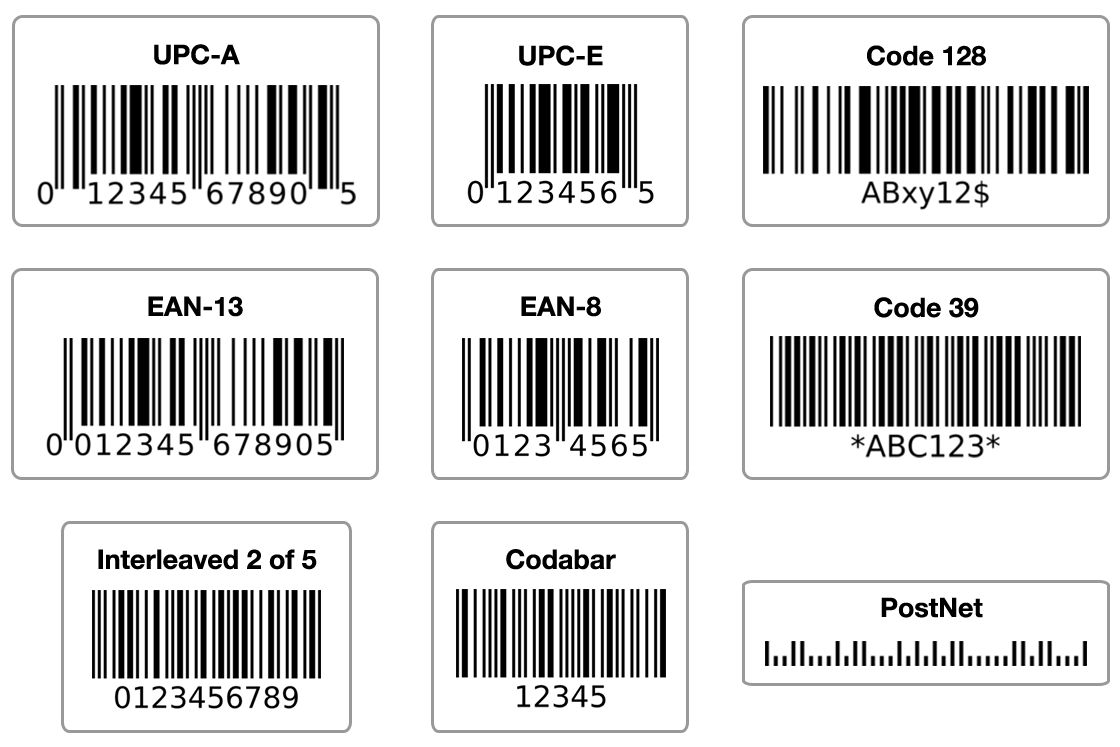
There are more than a dozen different types of barcodes used around the world for various purposes and systems, some of which are more recognised than others. The type you'll require is determined on how you'll use them. Scroll down to the topic or categories that are most relevant to your needs.
Barcodes for global retail
If you want to sell to one of the above-mentioned big box stores, you'll need one of the following: UPC or EAN barcodes are two types of barcodes. These are the two most common forms of barcodes used for point-of-sale products around the world. Depending on where you're selling, you'll need one of these.
UPC barcodes- Countries such as the United States, Canada, the United Kingdom, and Australia utilise UPC barcodes (Universal Product Codes). In such countries, the UPC-A and UPC-E versions are used on the majority of significant retail products. The normal variant, with 12 numbers, is known as UPC-A. UPC-E barcodes have only six numbers and are designed for smaller products.
EAN barcodes- Most of Europe, Asia, Africa, and Latin America utilise EAN barcodes (previously European Article Numbers, now International Article Numbers). The EAN-13 barcode (consisting of 13 numbers) or the EAN-8 barcode are commonly used (compressed version containing only 8 numbers).
4- How to apply barcode labels to your products
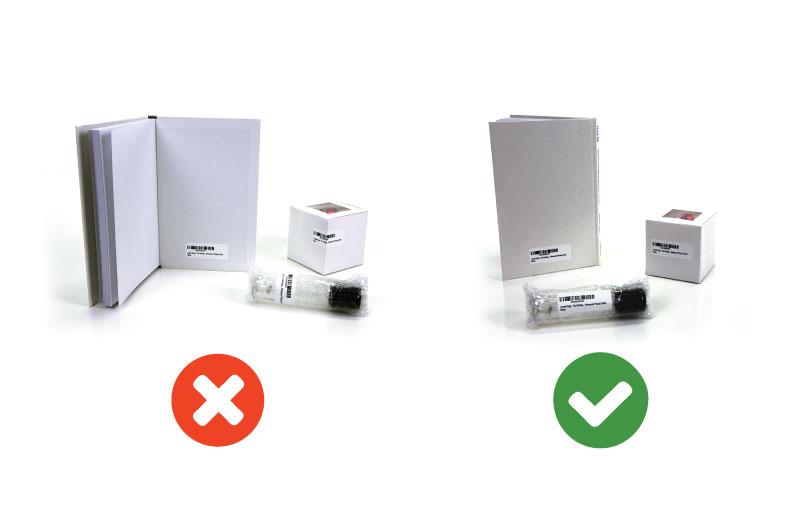 Your barcodes should be displayed in a prominent, visible, and consistent location. Before you start using them, keep these pointers in mind:
- Place at least 8mm from a seam or packaging fold. Barcode scanners can't read the codes around corners.
- Find a smooth or consistently curved surface for application. Inconsistently curved surfaces will give the scanner a hard time.
- Follow the direction of the barcode. Certain scanners work best with particular orientations.
3 Easy Steps to Buy Barcodes
1- Buying barcodes is easy – simply select the quantity you want to buy.
2- Click on purchase.
3- Fill in your details and click ‘Pay Now’.
Your barcode numbers, images and certificate of ownership will automatically be sent to you within a few minutes of your order.
Download a Sample Barcode
Why Buy From Us?
No Joining Fees, No Membership Fees, No Ongoing Fees of Any Kind
- No annual fees- Lifetime Ownership of Barcodes
- Guaranteed unique numbers
- Fast service
- Barcodes can be used internationally
- Lowest pricing
- Secure Ordering available
- Build Credibility With Retailers


